

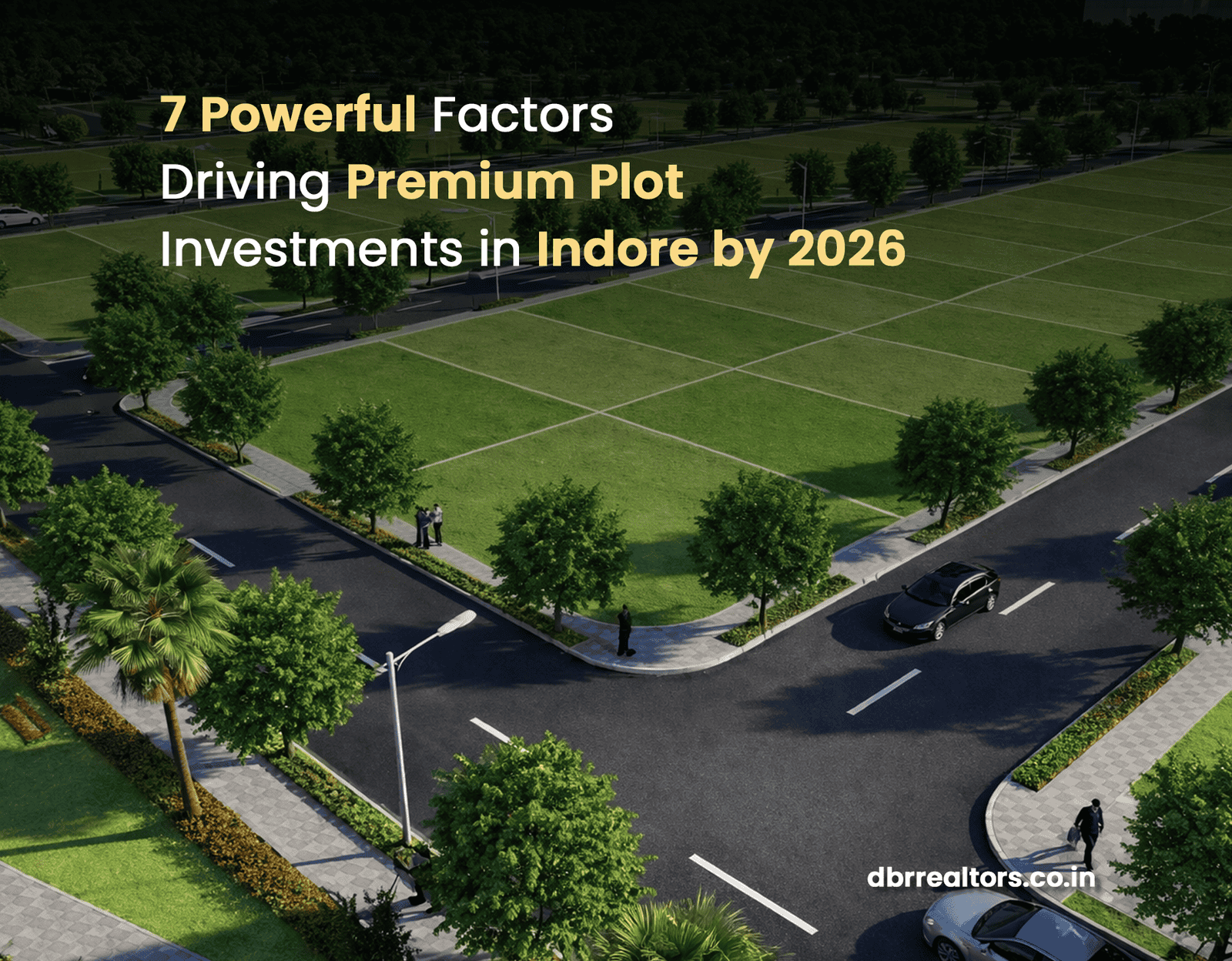
Indore has steadily transformed from a tier-2 city into one of Central India’s most promising real estate markets. With strong infrastructure planning, rising employment corridors, and increasing preference for land ownership over apartments, the city is entering a decisive growth phase. As 2026 approaches, investors and end-users alike are reassessing how plotted developments fit into long-term wealth creation, lifestyle flexibility, and capital appreciation.
This article breaks down the structural and economic forces shaping Indore’s plot market—helping buyers make informed, future-ready decisions.
- Infrastructure Expansion Accelerating Land Value Growth
One of the biggest drivers of real estate appreciation is infrastructure—and Indore is witnessing it at scale. The Super Corridor, AB Bypass expansion, metro rail development, and enhanced road connectivity to Pithampur and Ujjain are reshaping land demand patterns.
According to state urban development projections, areas near integrated transport corridors have historically shown 18–25% faster appreciation compared to inner-city locations. This directly impacts demand for plots for sale in dewas naka indore, especially those located near planned commercial and IT zones.
- Rising Demand for Low-density Residential Living
Post-pandemic buyer behavior has shifted sharply toward independent living. Larger families, professionals, and retirees now prioritize space, privacy, and the freedom to design homes on their own terms.
This lifestyle shift is increasing interest in residential plots in Indore, particularly within gated townships offering planned amenities. Market surveys indicate that plotted developments now account for nearly 32% of new residential inquiries, a figure expected to cross 40% by 2026.
- Plot Investments Outperforming Apartments
From a financial standpoint, land assets continue to outperform constructed properties over longer horizons. Unlike apartments, plots have:
* No structural depreciation
* Lower maintenance costs
* Higher liquidity in resale markets
Industry data from real estate consultancies shows plotted developments delivering 1.3x–1.6x higher CAGR compared to mid-segment apartments in emerging cities like Indore.
This reinforces why premium plots in Indore are being viewed not just as lifestyle purchases, but as strategic investment instruments.
- Regulatory Stability and RERA-led Transparency
The implementation of RERA has significantly improved buyer confidence in plotted townships. Approved layouts, clear land titles, and transparent development timelines are now baseline expectations rather than exceptions.
By 2026, RERA-compliant plotted projects are expected to dominate new launches, reducing speculative risk and improving trust—especially for first-time investors entering the best residential plots in the Indore segment.
- Employment Growth Fueling End-user Demand
Indore’s expanding IT parks, educational institutions, logistics hubs, and manufacturing clusters are creating consistent housing demand. With an annual employment growth rate estimated at 8–10%, the city’s working population is projected to rise substantially by 2026.
This organic demand supports steady absorption of plotted developments, ensuring price stability and reducing volatility for long-term investors.
- Limited Land Supply Within Planned Zones
Unlike apartments, land is finite—especially within city planning limits. As Indore expands outward, well-located, plotted townships become scarce assets.
Urban planning reports suggest that only 22–25% of newly notified residential zones will permit plotted developments post-2026, further tightening supply. This scarcity effect is a major appreciation catalyst for early investors.
- Interlinked Growth with Indore’s 2026 Forecast
For a deeper macro-level perspective, this trend aligns closely with insights shared in our related analysis:
Premium plots in Indore set to surge in 2026. This internal reference highlights how policy, population growth, and infrastructure convergence are collectively redefining Indore’s land market trajectory.
Conclusion
As Indore advances toward 2026, plotted developments stand at the intersection of lifestyle evolution and long-term capital growth. Infrastructure readiness, regulatory clarity, and changing buyer preferences are no longer future possibilities—they are present-day realities shaping investment decisions.
For those seeking stability, flexibility, and appreciation potential, the city’s plotted real estate segment offers a compelling opportunity—one rooted in fundamentals rather than speculation.
